The Journal
All Stories
Every published article from the archive. Filter by category or search across titles and content.
18 stories
Sorted by date (newest)

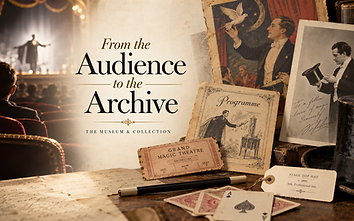
The Museum & Collection
From the Audience to the Archive
Before there was a collection, there was the feeling—the mystery of seeing something that seemed impossible, the wonder of not knowing how it had been done, and sometimes the irresistible urge to solve the puzzle. Years of watching magic on television, at fairs and festivals, in local performances, and eventually in major theaters helped shape the ideas that became The Upchurch Collection of Magic.
September 30, 2026
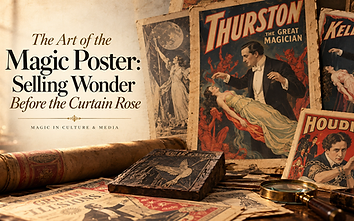
Magic in Culture & Media
The Art of the Magic Poster: Selling Wonder Before the Curtain Rose
Long before audiences saw the illusion, they saw the promise. Magic posters transformed performers into larger-than-life figures through color, spectacle, danger, mystery, and sometimes deliberate exaggeration. Today, those advertisements preserve more than beautiful artwork—they reveal how magicians wanted to be seen and how entire generations were persuaded to believe that something extraordinary was coming to town.
September 28, 2026
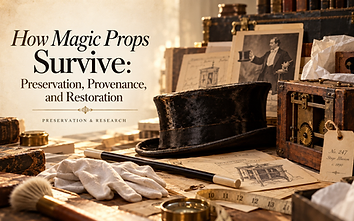
Preservation & Research
How Magic Props Survive: Preservation, Provenance, and Restoration
Magic props were built to perform, not to spend centuries in museums. Wood warps, metal corrodes, fabric fades, mechanisms seize, and careless restoration can erase the very evidence that makes an object historically important. Preserving magic apparatus therefore requires more than keeping it safe. It requires understanding where it came from, how it was used, what should be repaired, and what should be left alone.
September 28, 2026

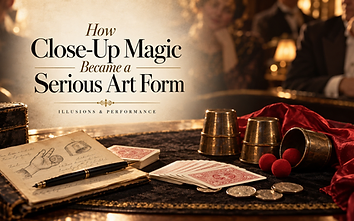
Illusions & Performance
How Close-Up Magic Became a Serious Art Form
Close-up magic uses some of the smallest objects in the magician's repertoire—cards, coins, rings, cups, balls, and borrowed objects—yet it can create some of the strongest illusions. Its rise from informal demonstrations and supporting material to a respected performance discipline changed the way magicians thought about technique, psychology, presentation, and the relationship between performer and audience.
September 28, 2026

Magic in Culture & Media
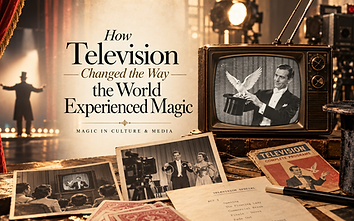
How Television Changed the Way the World Experienced Magic
Before television, most magic had to be experienced in person. A magician traveled to the audience, performed in a theater, nightclub, fairground, or vaudeville house, and disappeared when the engagement ended. Television reversed that relationship. Suddenly the magician could enter millions of homes at once, turning local performers into international personalities and changing not only how magic was presented, but what audiences expected magic to be.
September 28, 2026

The Museum & Collection
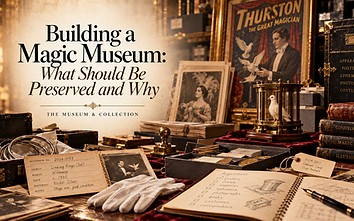
Building a Magic Museum: What Should Be Preserved and Why
A great magic collection cannot be built around famous names and impressive props alone. Posters, photographs, correspondence, tickets, books, performance-used objects, and even seemingly ordinary pieces of ephemera can preserve parts of magic history that would otherwise disappear. The challenge is deciding not simply what to collect, but what stories deserve to survive.
September 28, 2026

Magic History
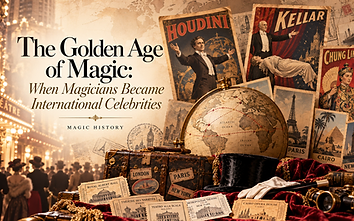
The Golden Age of Magic: When Magicians Became International Celebrities
From roughly the late nineteenth century through the early decades of the twentieth, magic entered an extraordinary period of theatrical ambition and public visibility. Railroads carried enormous illusion shows from city to city, color lithographs covered walls with impossible images, newspapers transformed publicity stunts into news, and performers such as Kellar, Thurston, Houdini, Chung Ling Soo, and Lafayette became celebrities whose names could sell a theater before audiences knew what they were going to see.
September 27, 2026

Magic History
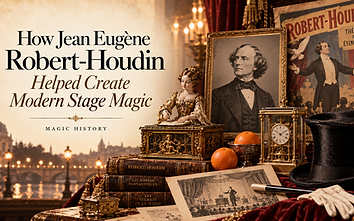
How Jean-Eugène Robert-Houdin Helped Create Modern Stage Magic
Jean-Eugène Robert-Houdin is often called the father of modern magic, but his real importance is more interesting than the title suggests. He did not invent conjuring, theatrical magic, or even the elegant salon magician. What he did was bring together mechanics, science, theatrical design, natural presentation, and the persona of the gentleman performer in a way that profoundly influenced the magicians who followed him.
September 27, 2026

Magic History
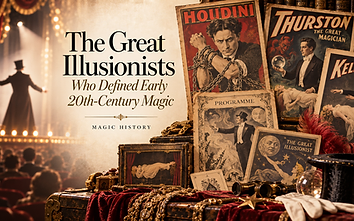
The Great Illusionists Who Defined Early 20th-Century Magic
The first decades of the twentieth century were an extraordinary period for stage magic. Full-evening illusion shows traveled with tons of scenery and apparatus, magicians became international celebrities, and performers competed to create spectacles audiences had never seen before. Harry Kellar, Adelaide Herrmann, Howard Thurston, Chung Ling Soo, Houdini, Blackstone, Dante, and others did more than perfect individual tricks. Together, they established many of the images, illusions, and traditions that still define stage magic.
September 27, 2026

Artifacts & Collecting
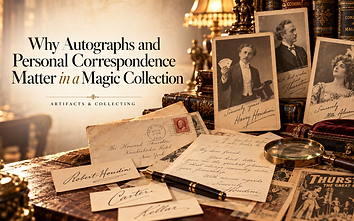
Why Autographs and Personal Correspondence Matter in a Magic Collection
An autograph can establish a direct connection to a performer, but a letter can do something even more important: it can preserve the performer's voice. In a field built around public personas, secrecy, collaboration, and constant reinvention, signed photographs, inscriptions, letters, notes, and correspondence can reveal the human relationships and working history that posters and props alone cannot.
September 27, 2026


Magic History
Women in the History of Stage Magic
Women were never absent from stage magic. They were headliners, manipulators, mentalists, escape artists, assistants, television pioneers, and institutional leaders. The problem is that the historical record often placed them under someone else's name, inside someone else's act, or outside the story altogether.
September 27, 2026

Artifacts & Collecting
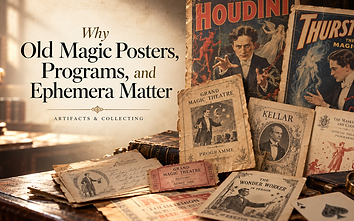
Why Old Magic Posters, Programs, and Ephemera Matter
Magic ephemera was created to be temporary. Posters were pasted to walls, programs were folded into pockets, tickets were torn at theater doors, and handbills were discarded once the show left town. Precisely because these objects were never expected to become history, the examples that survive can reveal details about performers, theaters, touring routes, illusions, audiences, and careers that more formal histories often miss.
September 27, 2026

Magic in Culture & Media
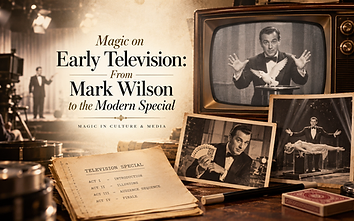
Magic on Early Television: From Mark Wilson to the Modern Special
Long before David Copperfield made the Statue of Liberty disappear or David Blaine brought street magic to prime-time television, magicians were experimenting with a medium that barely existed. From primitive broadcasts in the 1930s to Mark Wilson's groundbreaking national series, Dick Williams's record-setting Magicland in Memphis, Doug Henning's live spectaculars, and the annual television events of the Copperfield era, television created an entirely new chapter in the history of magic.
September 27, 2026

Artifacts & Collecting
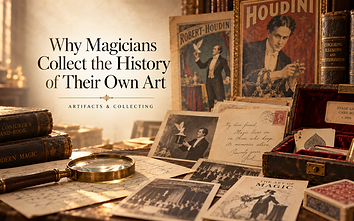
Why Magicians Collect the History of Their Own Art
Magicians have an unusually long tradition of becoming historians of their own art. They save books, apparatus, photographs, posters, letters, programs, manuscripts, and even seemingly insignificant scraps of paper because they understand how quickly a performance can disappear. From Harry Houdini and Robert Lund to Ricky Jay and David Copperfield, some of the people most determined to preserve magic have been magicians themselves.
September 27, 2026

Illusions & Performance
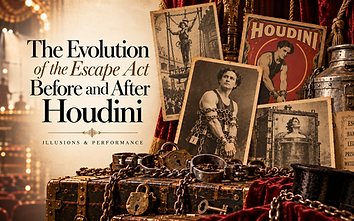
The Evolution of the Escape Act Before and After Houdini
Harry Houdini did not invent the escape act, but he changed its scale, language, and public meaning so completely that escapology became inseparable from his name. Before Houdini, restraints often appeared inside spiritualist demonstrations, challenge acts, and theatrical magic. After him, escape artists inherited both a vocabulary of chains, straitjackets, water, and confinement—and the nearly impossible problem of performing in the shadow of the man who had made escape itself a form of celebrity.
September 27, 2026


Illusions & Performance
The History of Sawing a Woman in Half
Few images are more immediately associated with stage magic than a magician apparently sawing a human being in half. Born into modern theatrical magic in the early twentieth century, the illusion evolved from P.T. Selbit's enclosed wooden box into visible-head-and-feet versions, buzz saws, thin cabinets, and eventually performances in which the magician became the victim. Its history reveals not only changing technology, but changing ideas about danger, spectacle, assistants, gender, and what audiences need to see in order to believe the impossible.
September 27, 2026


Magic in Culture & Media
The Rise of Las Vegas as the Capital of Stage Magic
Las Vegas did not invent stage magic, and it was not always the center of the art. Its importance grew gradually as casino showrooms, resort economics, tourism, television, and purpose-built theaters created something earlier touring illusionists could only have imagined: a city where a magician could stop traveling, install an enormous production permanently, and perform for a new audience night after night. From Gloria Dea and the early Strip to Siegfried & Roy, Lance Burton, David Copperfield, Penn & Teller, Mac King, and Criss Angel, Las Vegas changed not only where magic was performed, but what a professional magician's career could look like.
September 27, 2026

Magic in Culture & Media
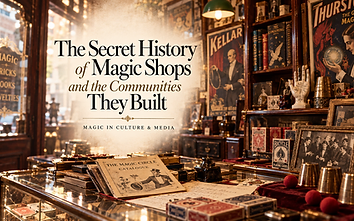
The Secret History of Magic Shops and the Communities They Built
Magic shops were never merely places to buy tricks. For generations, they served as classrooms, meeting places, informal clubs, rumor exchanges, testing grounds, and gateways into an art built partly upon guarded knowledge. From Martinka's shop in New York and Davenports in London to Tannen's and Abbott's, the counter of a magic shop helped connect beginners with professionals, performers with inventors, and isolated enthusiasts with a larger magical community.
September 27, 2026